AIDS United's Mackenzie Flynn presented her research at the 2023 STD Engage conference, which was held in New Orleans, Louisiana, May 15-19. Below is the narrative of the poster she presented.
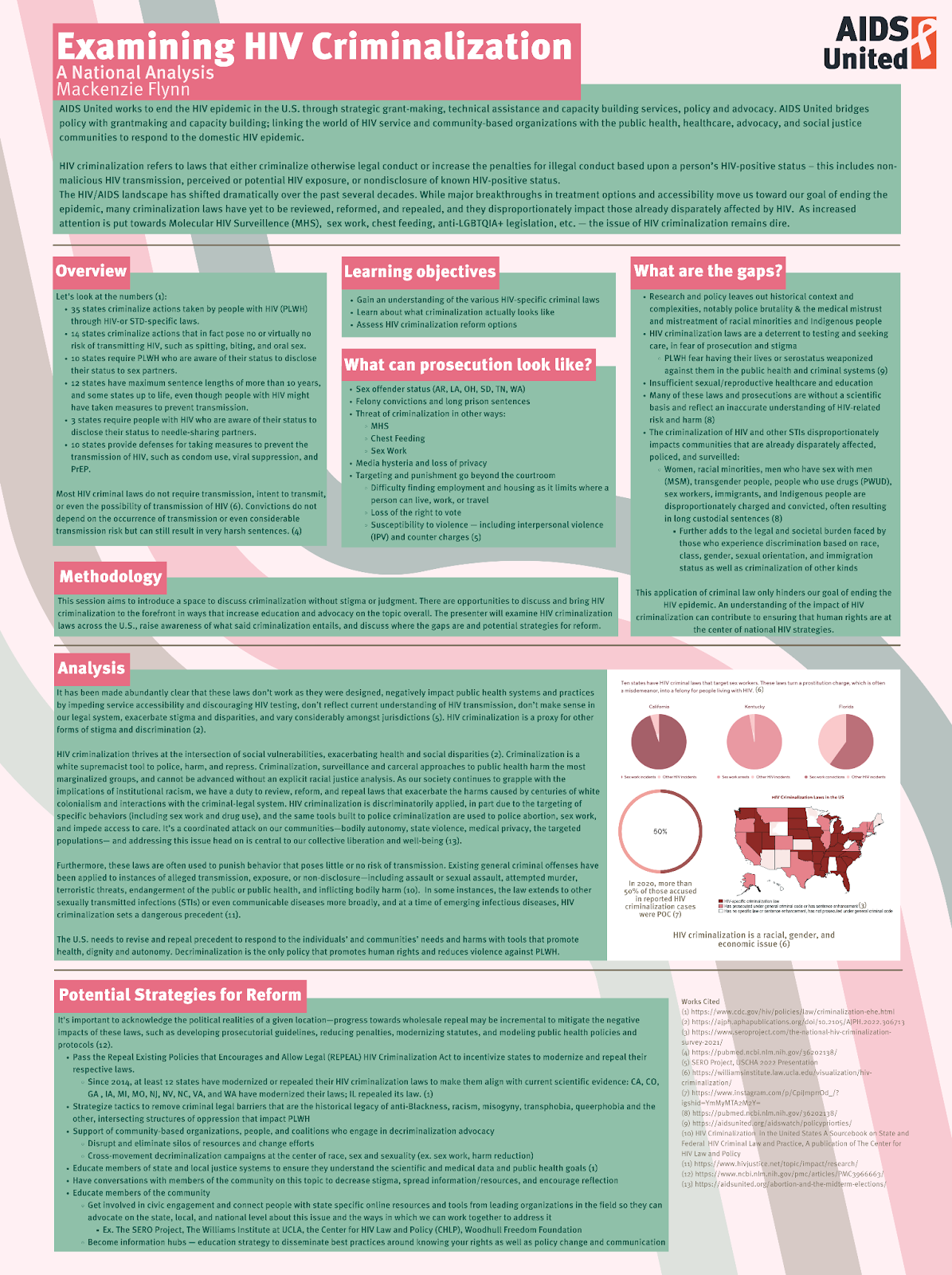
HIV criminalization refers to laws that either criminalize otherwise legal conduct or increase the penalties for illegal conduct based upon a person’s HIV-positive status — this includes nonmalicious HIV transmission, perceived or potential HIV exposure or nondisclosure of known HIV-positive status.
While the HIV landscape has shifted dramatically over the past several decades, including major breakthroughs in treatment options and accessibility (most HIV criminalization laws were enacted before antiretroviral therapies and preexposure prophylaxis), that move us toward our goal of ending the epidemic, many criminalization laws have yet to be reviewed, reformed and repealed, and they disproportionately impact those already disparately affected by HIV.
As increased attention is put toward molecular HIV surveillance, sex work, chest feeding, anti-LGBTQIA+ legislation, etc., the issue of HIV criminalization remains dire.
According to the CDC:
- 35 states criminalize actions taken by people living with HIV through HIV-or sexually transmitted infection-specific laws.
- 14 states criminalize actions that in fact pose no or virtually no risk of transmitting HIV, such as spitting, biting and oral sex.
- 10 states require people living with HIV who are aware of their status to disclose their status to sex partners.
- 12 states have maximum sentence lengths of more than 10 years, and some states are up to life, even though people living with HIV might have taken measures to prevent transmission.
- Three states require people living with HIV who are aware of their status to disclose their status to needle-sharing partners.
- 10 states provide defenses for taking measures to prevent the transmission of HIV, such as condom use, viral suppression and PrEP.